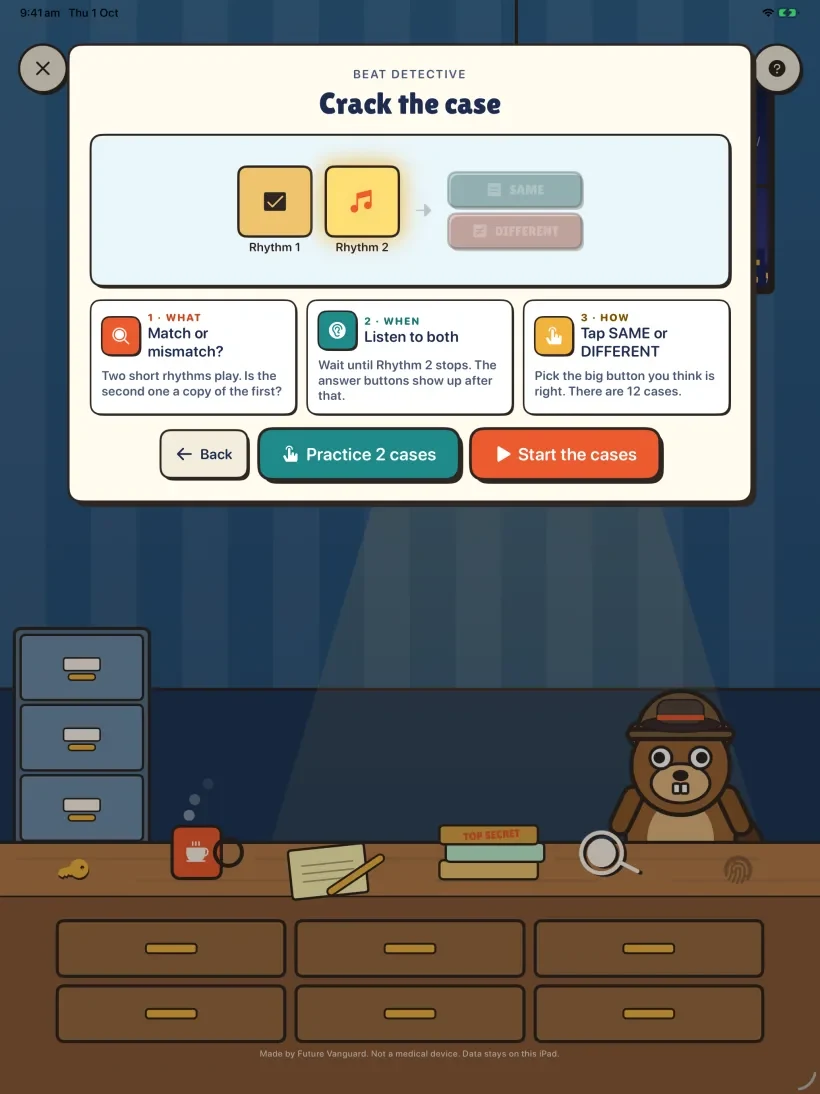
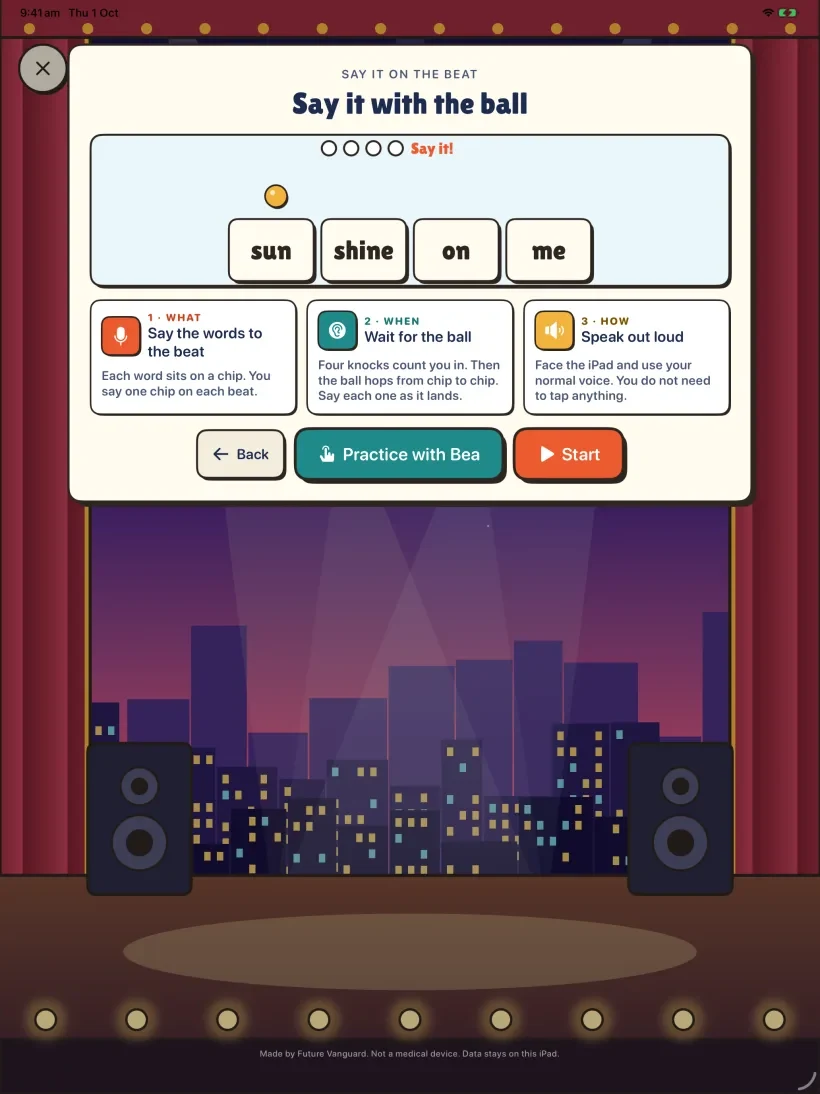
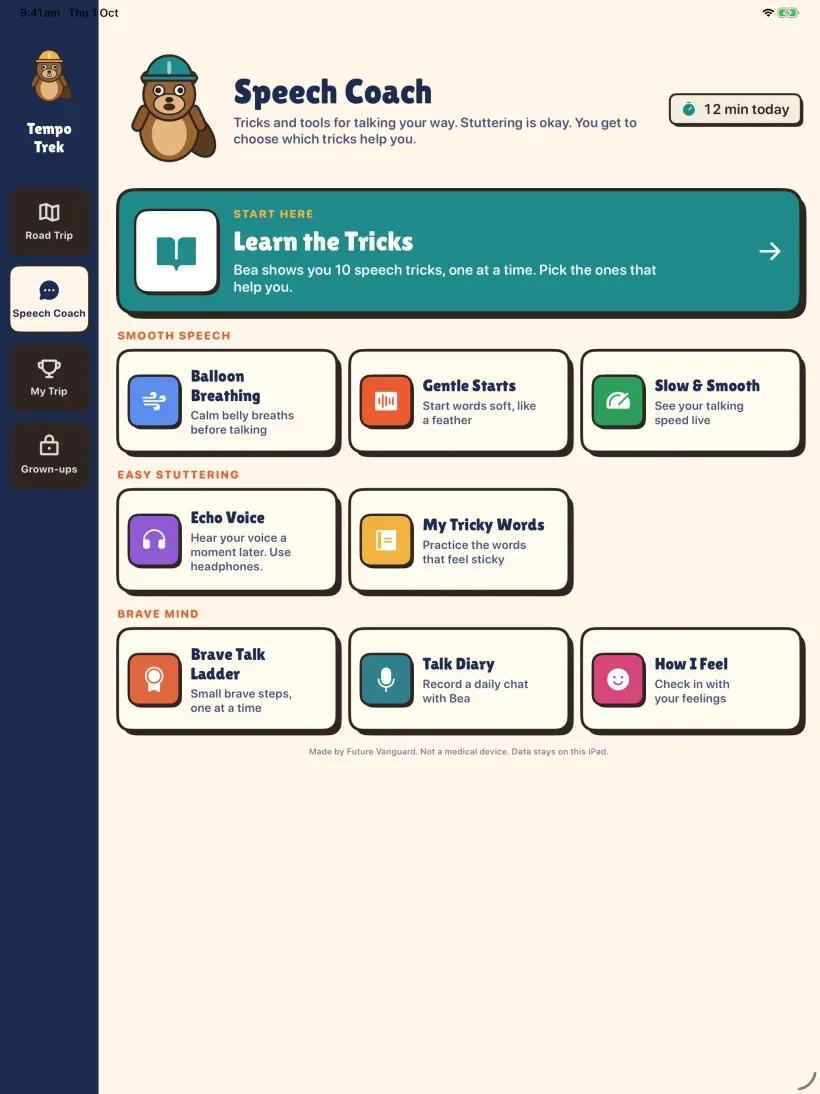
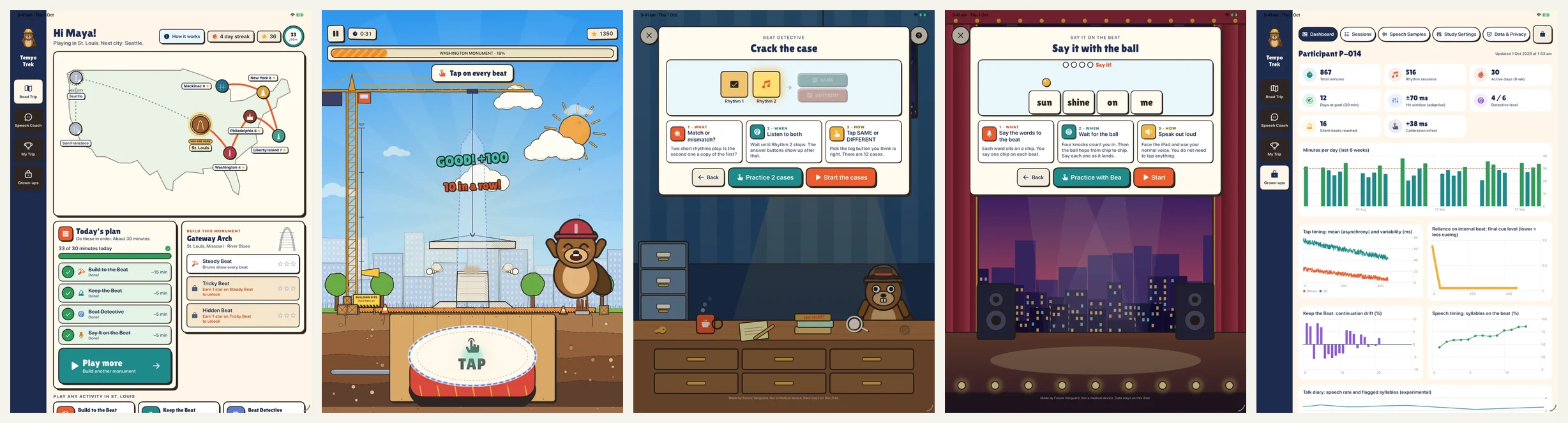
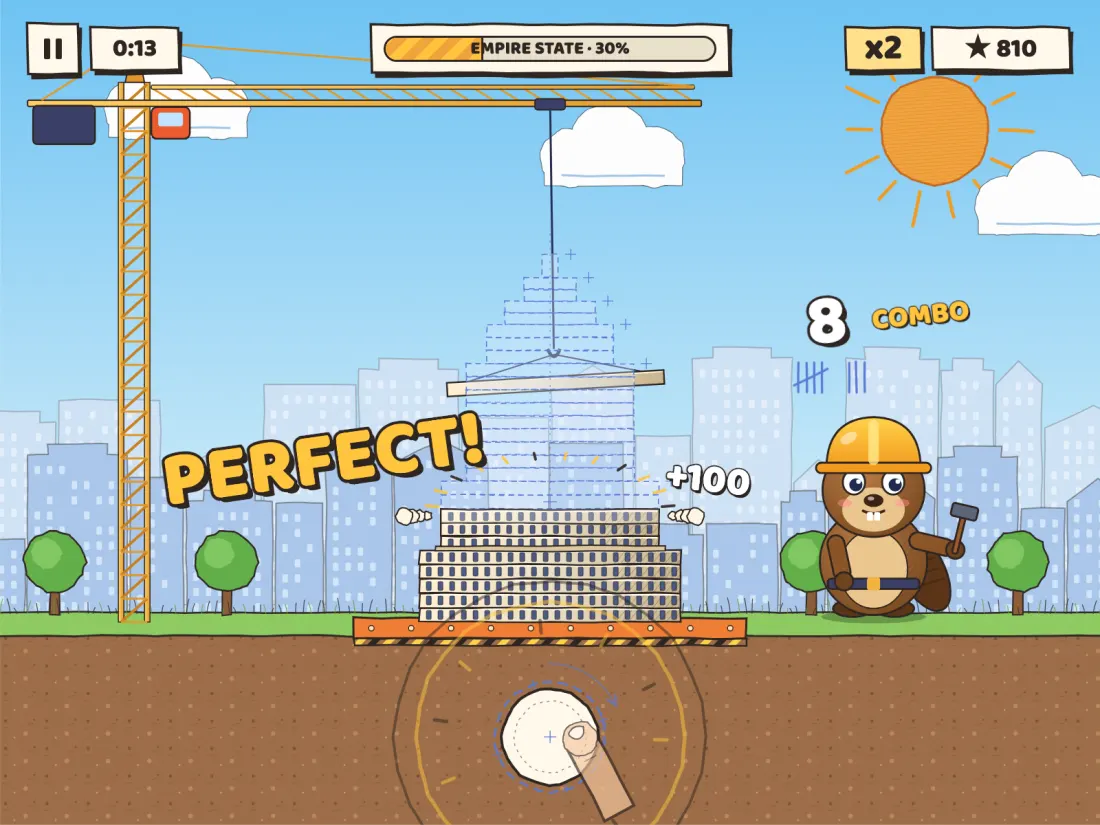
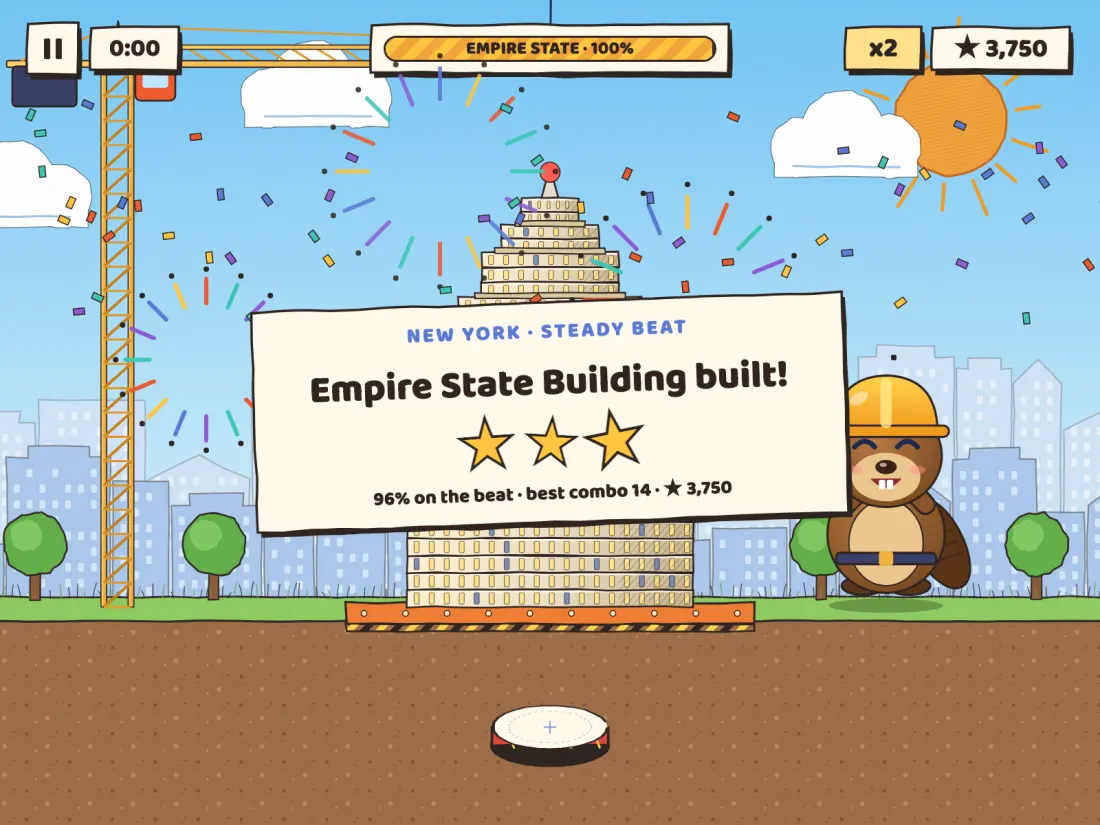
| Speech and nonspeech rhythm activities | Speech and nonspeech rhythm activities in one game. The starting point has three nonspeech activities (Build to the Beat, Keep the Beat, Beat Detective) and one speech rhythm activity (Say It on the Beat). The final set follows your framework. |
| Progressive levels of difficulty | Tiered ladders inside every activity. The starting point uses cue fading, simple to complex to hidden beat, simple metric to complex metric to nonmetric, and longer silences, and your team sets the progression. |
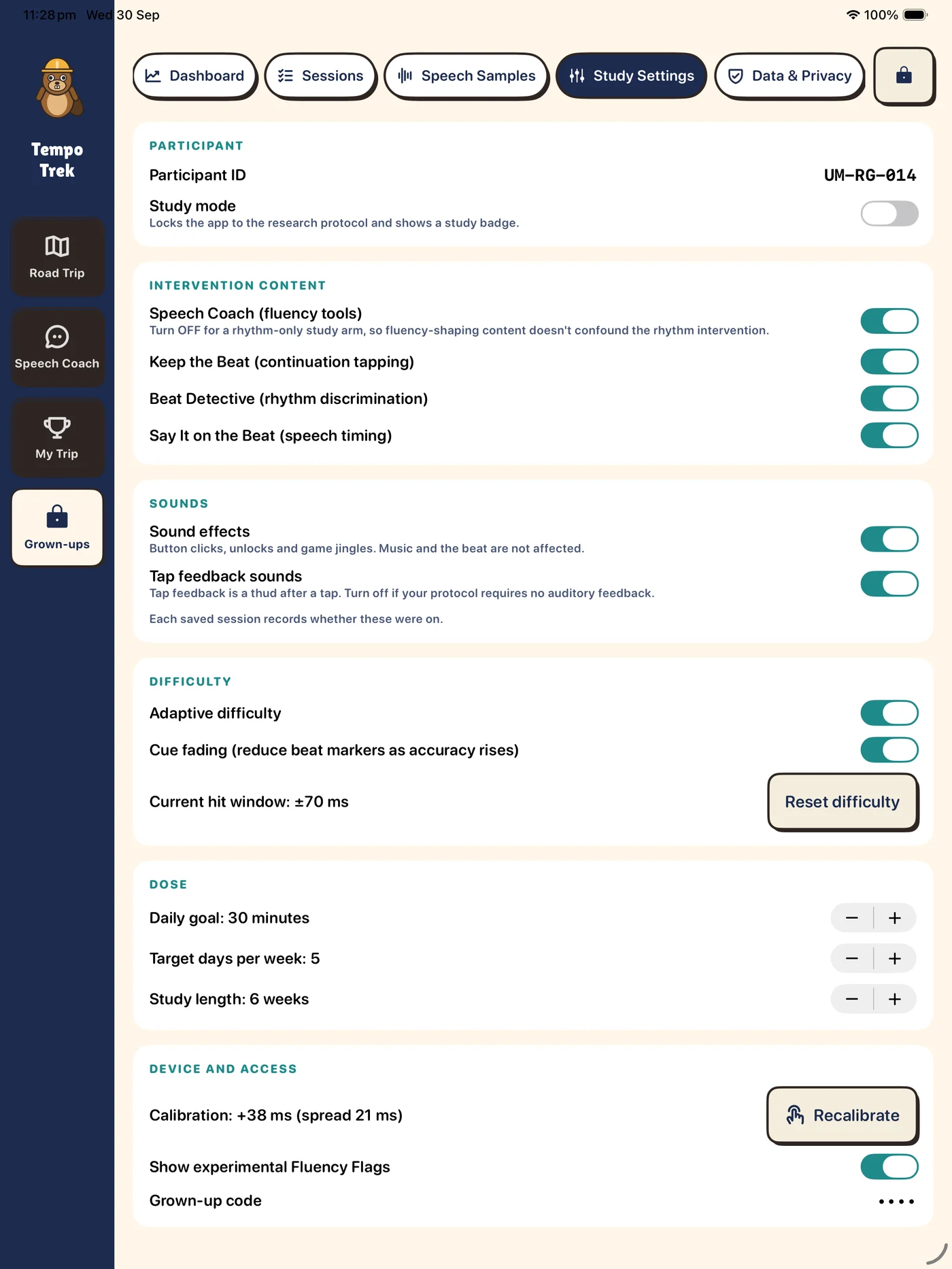
| Performance based adjustment | Difficulty is set per child and per module: hit window, cue fade rate, Beat Detective level, silent beat length and tempo shift. Every change is written to the session record. |
| At least 30 minutes a day, 3 to 5 days a week, for 6 weeks | Short chunks, module rotation, streaks, a passport and a road trip map. The grown-ups area sets the daily goal, target days and study length, and adherence is logged against them. |
| Instructions, feedback and progress indicators; resume at the right level | Clear spoken and on-screen instructions, instant feedback on every tap, and progress shown on the map. A returning child resumes exactly where the adaptive engine left them. |
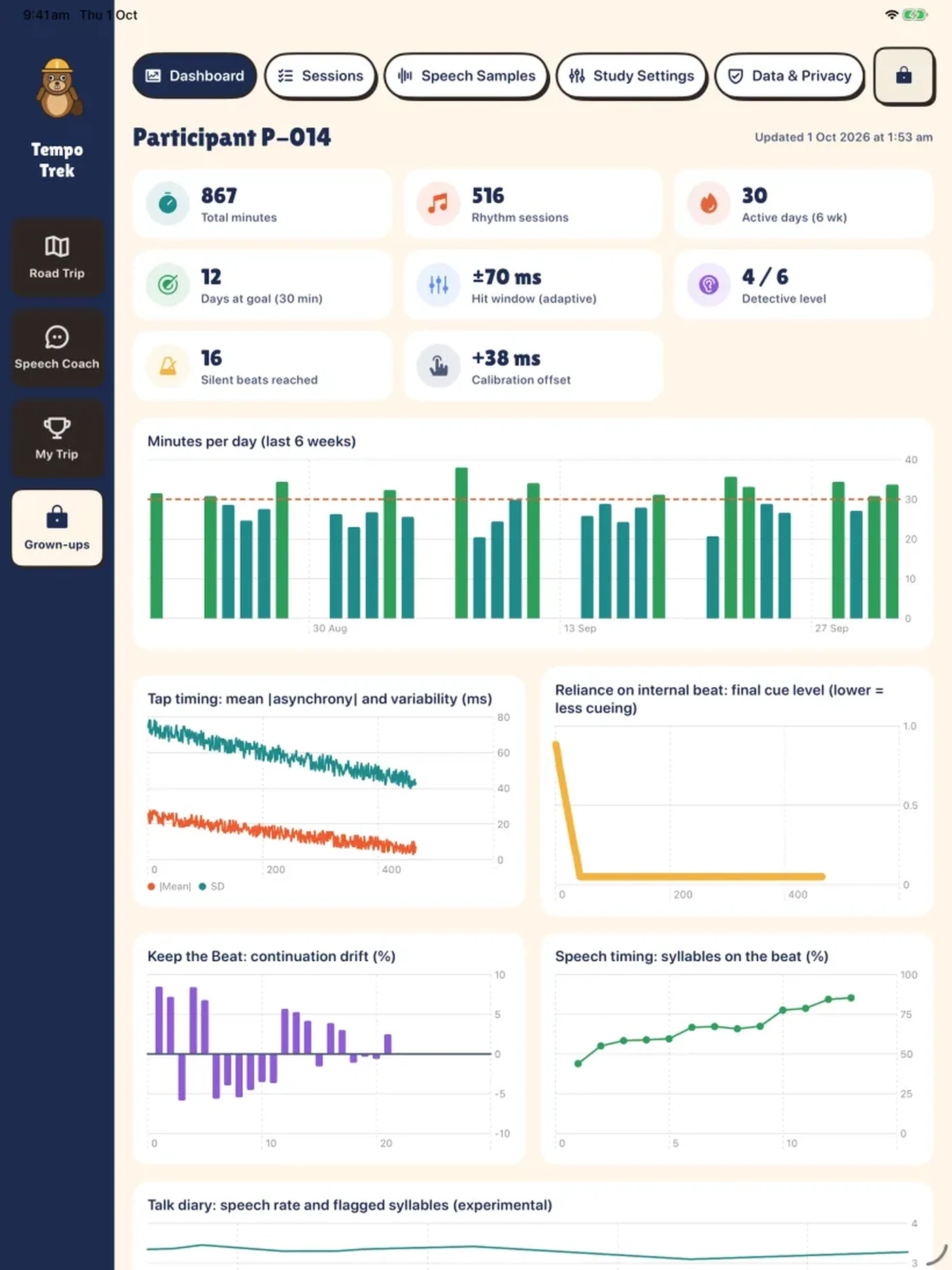
| Gameplay, adherence and performance data | Millisecond tap timing on the audio clock, per-trial logs, minutes per session, days per week and difficulty trajectory. See the next section. |
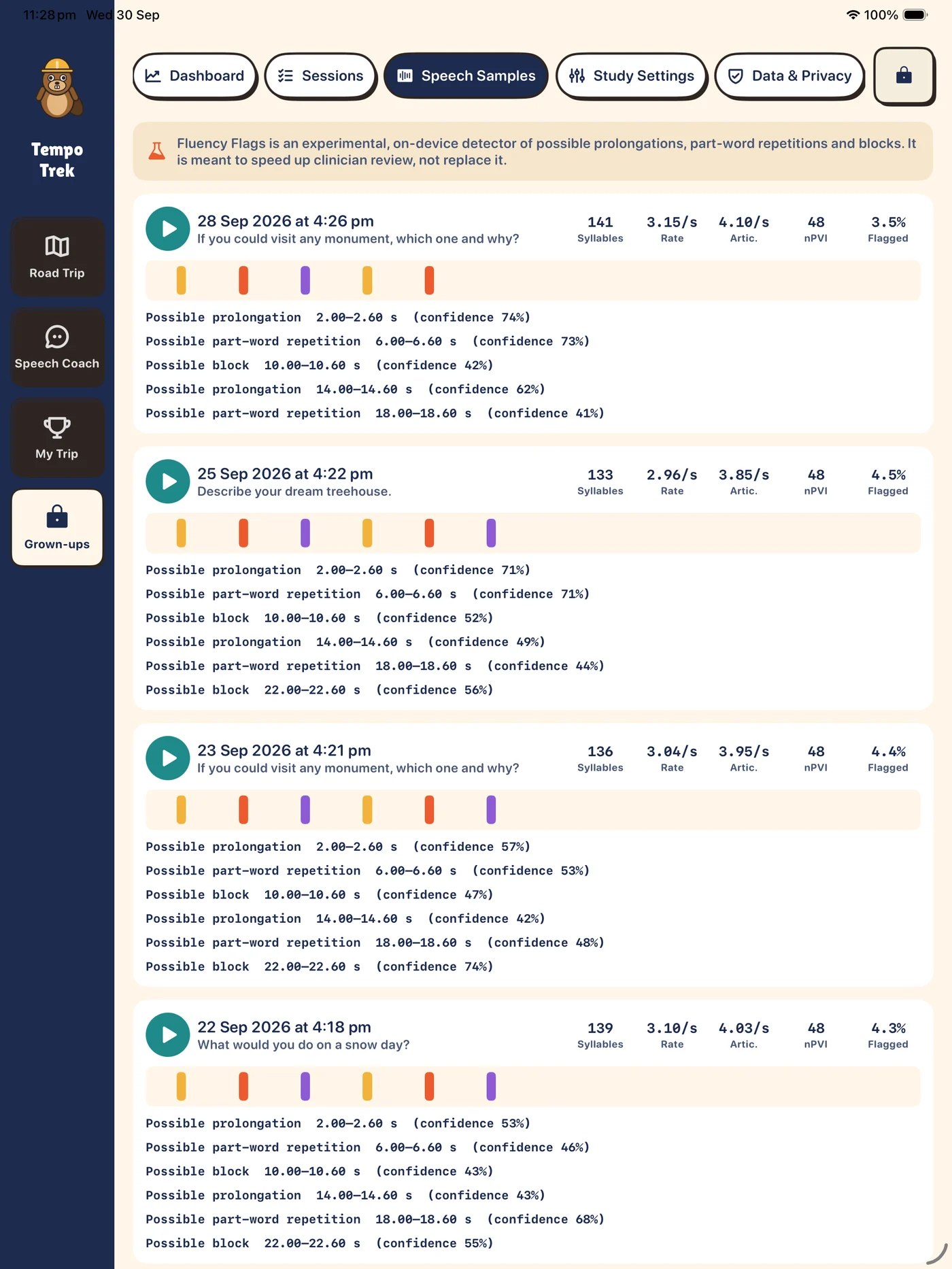
| Near real time researcher dashboard (Year 3) | A researcher dashboard is running in the starting point build, with a participant summary, minutes per day, timing trends and speech samples. In Year 3 we would extend it into the internal study dashboard UM describes, fed by the study data pipeline. |
| Authorized export in UM approved formats | Passcode protected export of JSON and CSV files for sessions, trials and speech. Exports carry the participant ID only. |
| IRB, privacy, security and accessibility | On-device protected storage, no network calls in the starting point build, a study mode that isolates the intervention, and VoiceOver, Dynamic Type and Reduce Motion support. Architecture, data flow, data field and security control documentation is produced for UM review. |
| Iterative refinement from researcher, clinician and participant feedback | Every quarter of the plan has a feedback loop with the UM team. Difficulty parameters are configurable, so refinements land as settings and content, not rewrites. Updates preserve existing data. |